Genuine vs. Dyed or Heat-Treated Crystals: A Spotter's Guide
Learn to spot dye pooling, unnatural saturation, and coated surfaces with simple at-home checks, and read...

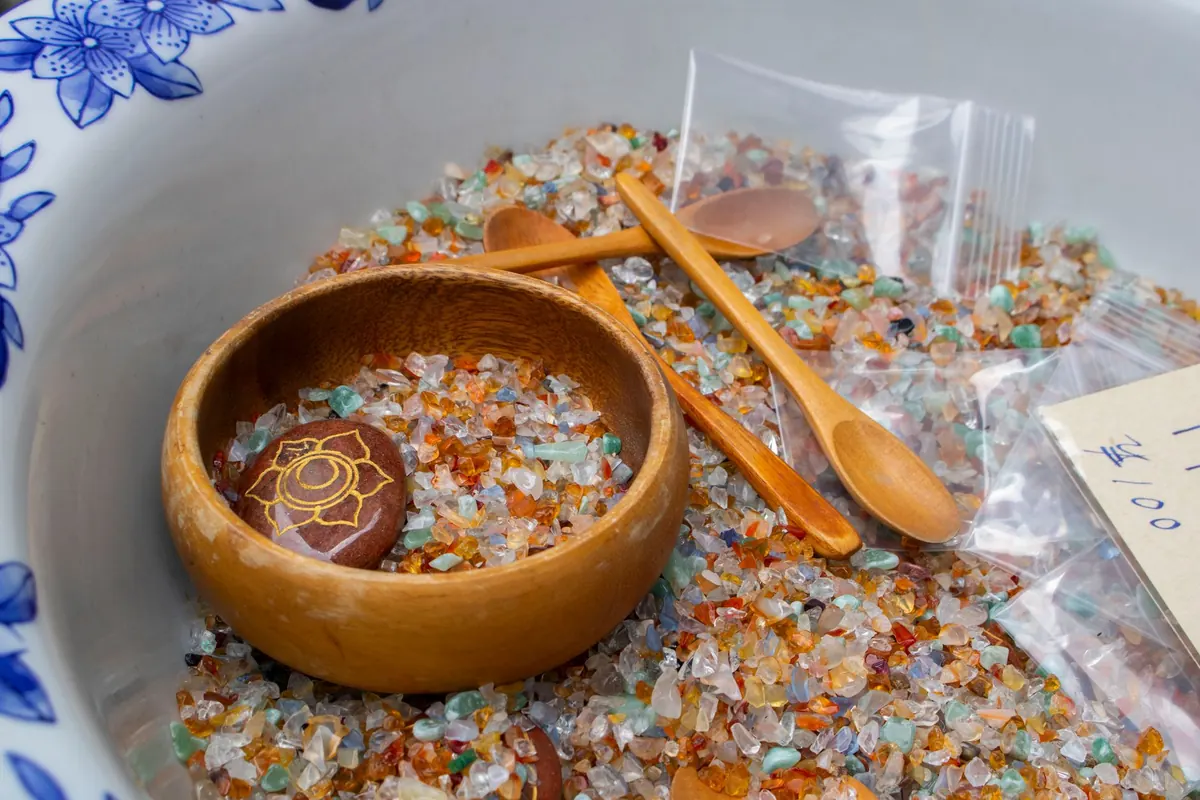
The first thing you notice at an Italian mineral show is the sound: tray after tray of specimens being set down on folding tables, someone calling out a price two aisles away, and a quiet, intense conversation about a locality label between a dealer and a collector who has clearly been having it for twenty years. Italy has a long and affectionate relationship with collecting, and its fairs reflect that. They are part market, part museum, part club meeting.
If you have never been to one, the prospect can feel a little intimidating. Rooms full of people who seem to know exactly what they are looking at, and you, holding a modest budget and a vague desire to own something beautiful. Almost everyone there started exactly where you are. What follows is how the circuit works, how the money side behaves, and what to put in your bag.
The Italian calendar runs roughly from late winter to late autumn, with a dense cluster of events in spring. Two formats dominate.
A mostra mercato is a commercial exhibition: dealers behind tables, display cases of competition or museum-quality specimens, a modest admission fee, and usually a catalogue or at least a floor plan at the entrance. A borsa di scambio is a swap meet — often held in a sports hall, a parish centre or a fairground pavilion, sometimes with free or very cheap entry, where collectors rent a table to trade duplicates as much as to sell. The larger city shows tend to blend both: professional dealers in the main hall, swap tables along one side or in a second room.
Dealers set up before the doors open, which is why the first hour is the best hour. The finest pieces are not hidden; they are simply bought early. If a particular species or locality is on your list, arrive at opening, walk the room once quickly, then go back and buy. The last hour has its own charm — some dealers would rather sell than pack — but the best material is usually gone by then. Remember that many Italian venues sit outside the historic centre, in fairgrounds or industrial zones with easy parking but thin public transport. Check the journey before you commit to a Sunday.
Dealers tend to organise in one of two ways: by species or by locality. A locality-focused table is a pleasure to browse — Alpine quartz and fluorite, Sardinian zeolites, Elba iron minerals, Vesuvian lava specimens, Sicilian sulphur. A species-focused table lets you compare twenty fluorites side by side and understand why one costs five times another.
Learn to look at condition before beauty. Chips, cleaves, dings on a crystal face, dull patches, a specimen that has been glued back together or had a crystal reattached. Good dealers disclose this. Ask directly — “È riparato?” — and you will usually get an honest answer, often with the story attached. A vague answer is information too.
Fair pricing in Italy falls into broad tiers rather than fixed categories. At the bottom, common material sold by the piece or by the box: small thumbnails, tumbled stones, simple calcites and quartzes that make excellent first purchases and gifts. In the middle, cabinet specimens with a proper label and reasonable condition. At the top, aesthetic, undamaged, well-documented pieces in glass cases, priced accordingly and often not marked at all.
Unmarked prices are normal. Ask. Nobody is offended by “Quanto costa?”, and nobody expects you to guess.
Mild negotiation is normal, particularly on multiple purchases or late in the day, but aggressive haggling over an inexpensive specimen reads badly. A bundle question is politer than a lowball on a single piece: “C'è uno sconto se prendo questi tre?” Dealers remember faces, and the collector who is pleasant about a refusal gets a better welcome next year.
Cash remains genuinely useful — small dealers often prefer it — but cards and mobile payments are increasingly common at larger shows. Ask before you assume. For anything expensive, request a receipt with a short description; it is useful for insurance and for your own records. And set a budget before you walk in, carried in separate pockets. The last hour of a show is where budgets go to die.
Most of what you buy at a fair will be straightforward, but a few habits are worth keeping. Be cautious with tables where nothing is labelled at all; a serious dealer will tell you what a specimen is and where it came from, and will write it down. For anything regulated or potentially restricted — certain fossils, materials from protected species, anything that may need documentation to cross a border — ask for paperwork and check the rules before you pay rather than after. If a purchase is significant, or if you are unsure about export requirements, take proper advice instead of relying on a stallholder's assurance.
Transport matters too. Carry specimens flat and separated, and don't leave them in a hot car; some coloured minerals fade in strong sunlight, and sudden temperature swings are unkind to fragile pieces. Label everything the same evening, while you still remember which table it came from.
Go with a list, leave room for surprise, and talk to the people behind the tables. The specimen you remember for years is usually the one you almost didn't ask about.
Photo: Imani Williams / Pexels
Learn to spot dye pooling, unnatural saturation, and coated surfaces with simple at-home checks, and read...
A simple spring equinox routine for sorting, sunning, airing and recharging your crystal collection, with...
Six practical ways to display crystals on shelves, desks and trays so a collection reads as considered...